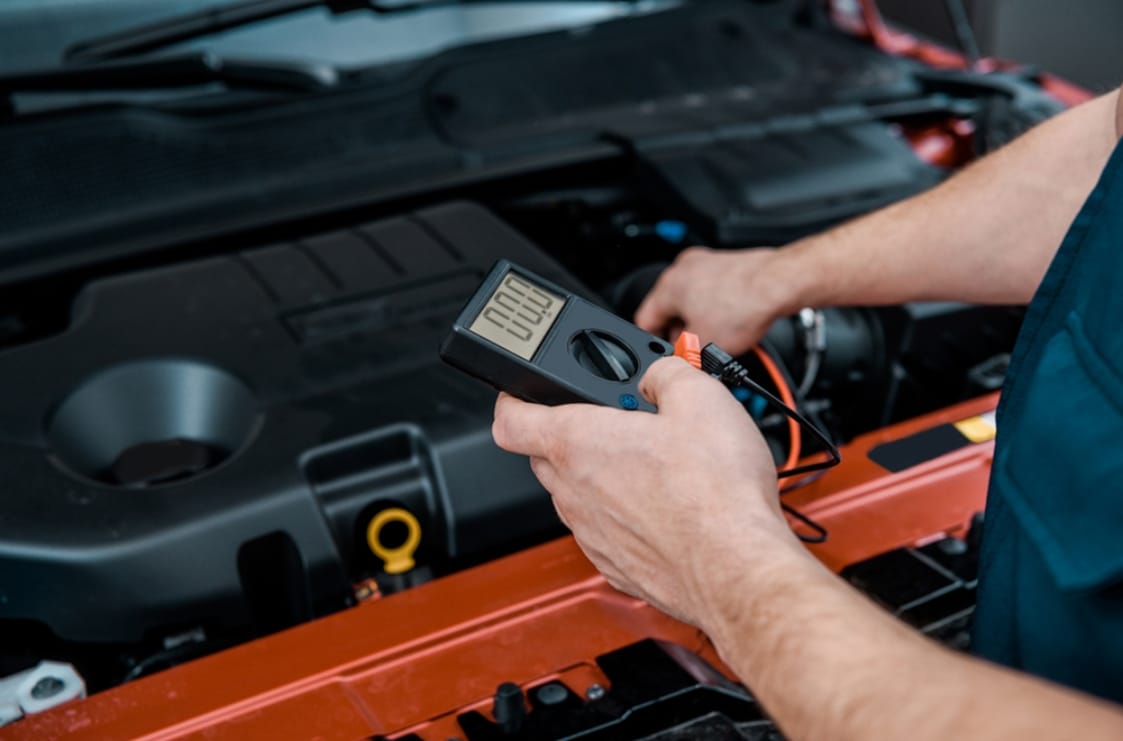
Have you ever wondered why your car suddenly won't start? Is a discharged battery the reason?

Have you ever wondered why your car suddenly won't start? Is a discharged battery the reason? This problem affects many vehicle owners and more. An unexpected battery discharge can lead to unpleasant surprises, such as being unable to start your car at a completely unexpected moment. It's therefore worth understanding why a battery discharges and what can affect its lifespan, so as to prevent such stressful situations in the future.
Are you wondering what's discharging your battery? There are many rea sons why a battery might lose power. First and foremost, it's important to remember that every battery has a specific lifespan, which can be shortened by various factors. One of these is improper vehicle usage, such as frequent short trips that drain the battery and don't allow it to be recharged by the alternator. Another factor could also be previously unidentified faults in the electrical system, charging system, or even the battery's own wear and tear. Each battery, depending on its age and usage pattern, also has a certain degree of self-discharge. Sometimes, we also install accessories in our vehicles that draw electrical energy continuously, even when the car and devices are turned off.
Damage to a car's electrical system can lead to uncontrolled battery discharge. An example of such a situation is a short circuit or damage to electrical wires, which cause a constant current draw from the battery even after the engine is turned off. It's worth regularly checking the condition of the wires and monitoring the electrical system's operation to avoid such problems. These faults can be caused by the age and oxidation of the electrical insulation of the wires, vibrations causing wires to fray, as well as the presence of rodents and mustelids, such as martens, in and around the car, as they sneak under the hood to warm themselves in the engine compartment, incidentally tasting the car's electrical system, clearing their way towards comfortable warm spots or acquiring build material for their nests.
Modern cars are equipped with many accessories that can significantly affect battery discharge. Examples include devices such as: dash cameras, rear view cameras, navigation systems, radios, air conditioning, refrigerators, device chargers or heated seats. Using these features without the engine running can lead to rapid battery discharge. To avoid this problem, it's advisable to use accessories only while driving or only shortly before starting your journey.
Every battery has a specific lifespan, which depends on its technology, quality of manufacture, and operating conditions. As time passes and with the number of charging/discharging cycles, the battery's capacity decreases, which can lead to faster discharge. The physicochemical conditions within the battery's electrolyte also change, which, along with the battery's increasing age, increases its self-discharge. In such cases, it may be necessary to replace the battery with a new one.
Prolonged and improper vehicle storage can also lead to battery discharge. This is particularly true when the vehicle remains unused for a long time, and when the car is exposed to extreme temperatures during parking, both in winter and summer. To avoid battery discharge problems, it's advisable to regularly start the engine and drive the car to give the alternator a chance to recharge the battery, and to check the battery's charge level. When washing the car, it's also a good idea to wipe off dust and dirt from the battery, as electrical charges can travel across such a layer between the terminals, leading to increased self-discharge of the battery.
Low temperatures can significantly decrease battery starting power, capacity and electrical efficiency, leading to faster discharge and difficulty starting the vehicle. A decrease in electrical efficiency means the battery charges more slowly and delivers less current, which is due to the slower rate of chemical reactions occurring within the battery. In winter, it's worth investing in special covers to insulate the battery from the cold or using parking spaces indoors that are heated to around room temperature. Additionally, remember that it's always a good idea to check the battery's charge level before a long journey in low temperatures.
High temperatures, both during use and storage of batteries, pose a higher risk of electrical short circuits and accelerate the rate of chemical reactions, including the oxidation of the active surfaces of our batteries. Every battery has a certain degree of self-discharge over time, so even batteries not installed in any device and not connected to any electrical circuit will require periodic checks of their condition and charge. Old or partially used batteries usually exhibit increased self-discharge. Self-discharge is closely related to temperature, and it can be assumed that its rate doubles with every 10°C increase in battery temperature. It's important to remember that if a car is parked in the sun and the ambient temperature exceeds 30°C, the temperature under the body panels will often exceed 50°C or even more. Therefore, summer can be just as detrimental to our batteries' efficiency as the winter, as they discharge quickly, and the chemical reactions that degrade their condition proceed very rapidly.
In the case of a new battery, the cause of discharge could be a manufacturing defect, excessively long storage or damage during transport. It's worth checking if the battery has any visible mechanical damage and if it was installed correctly in the car. If the discharge problem persists despite no visible causes, it's advisable to consult a car service centre or the battery manufacturer, as the reason for the battery discharge may lie within the vehicle itself or the accessories installed in it.
As mentioned above, there are many factors that affect battery discharge. To avoid this problem, you should ensure proper vehicle usage and parking, monitor the condition of the electrical systems, and regularly check the battery's charge level. For a new battery, pay attention to any potential damage and correct installation in the car.
By knowing what can discharge a battery and the reasons behind this phenomenon, you can avoid unpleasant surprises related to a lack of power in your car. Regular battery condition checks and proper vehicle usage are key to maintaining its efficiency for many years.